A waterfall in a park name does not make its pool a swimming area. Some parks permit river swimming with restrictions; others direct swimmers to a separate lake or beach.
· Sources checked September 21, 2026
Permission and conditions are separate checks
This guide does not identify safe jumping sites or guarantee safe swimming conditions. A short hike, a deep-looking pool or an old photograph does not establish permission, depth, current strength or water quality. Follow current closures, barriers and staff instructions.
Three different access arrangements
These examples explain why a park-wide “swimmable waterfall” label can mislead. They are not a ranking or a live opening-status feed.
River swimming permitted with restrictions
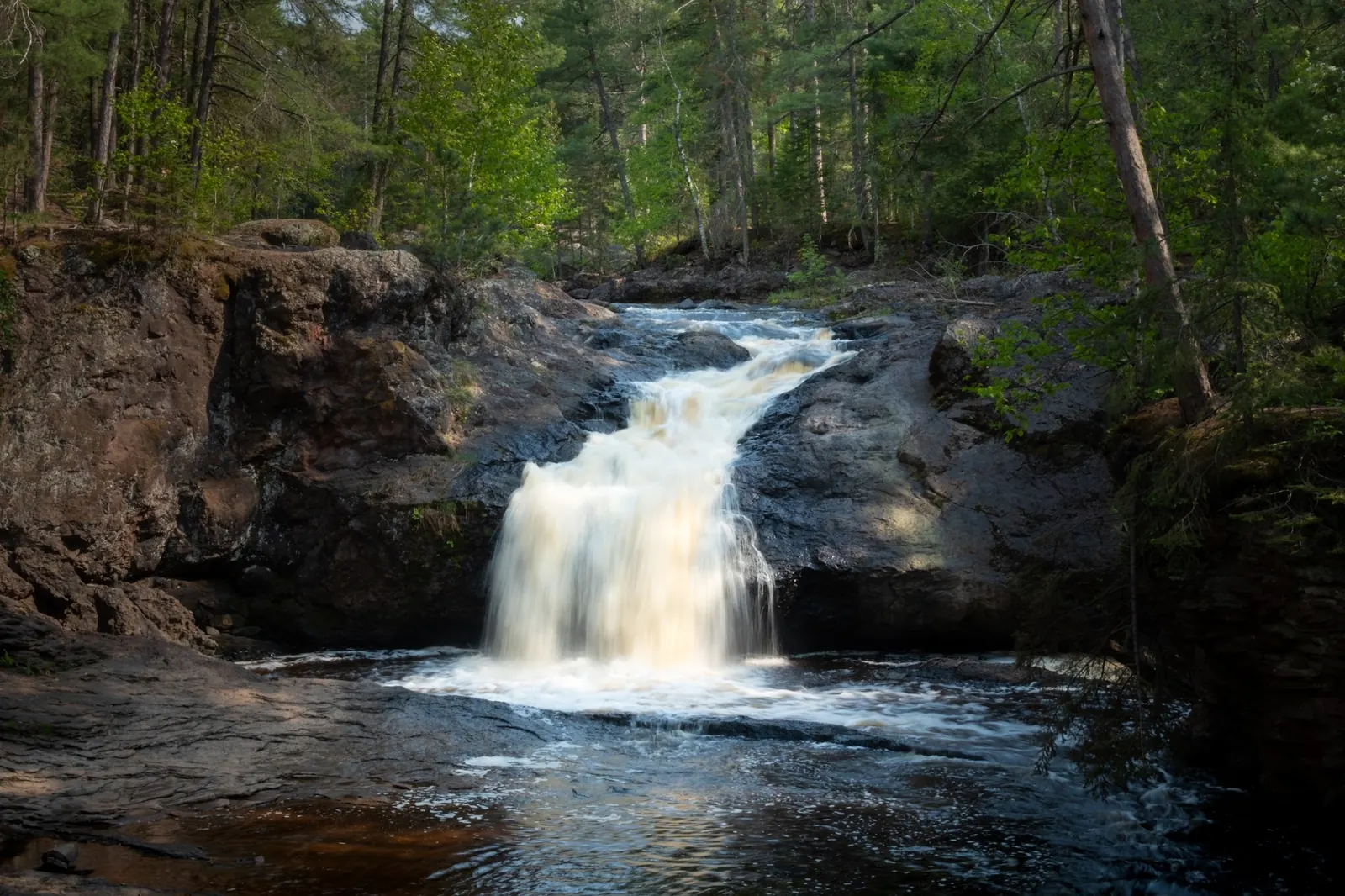
Amnicon Falls, Wisconsin
Wisconsin DNR permits swimming and wading, but provides no designated beach or lifeguards. Flows change, rocks can be slippery, and jumping and diving are prohibited.
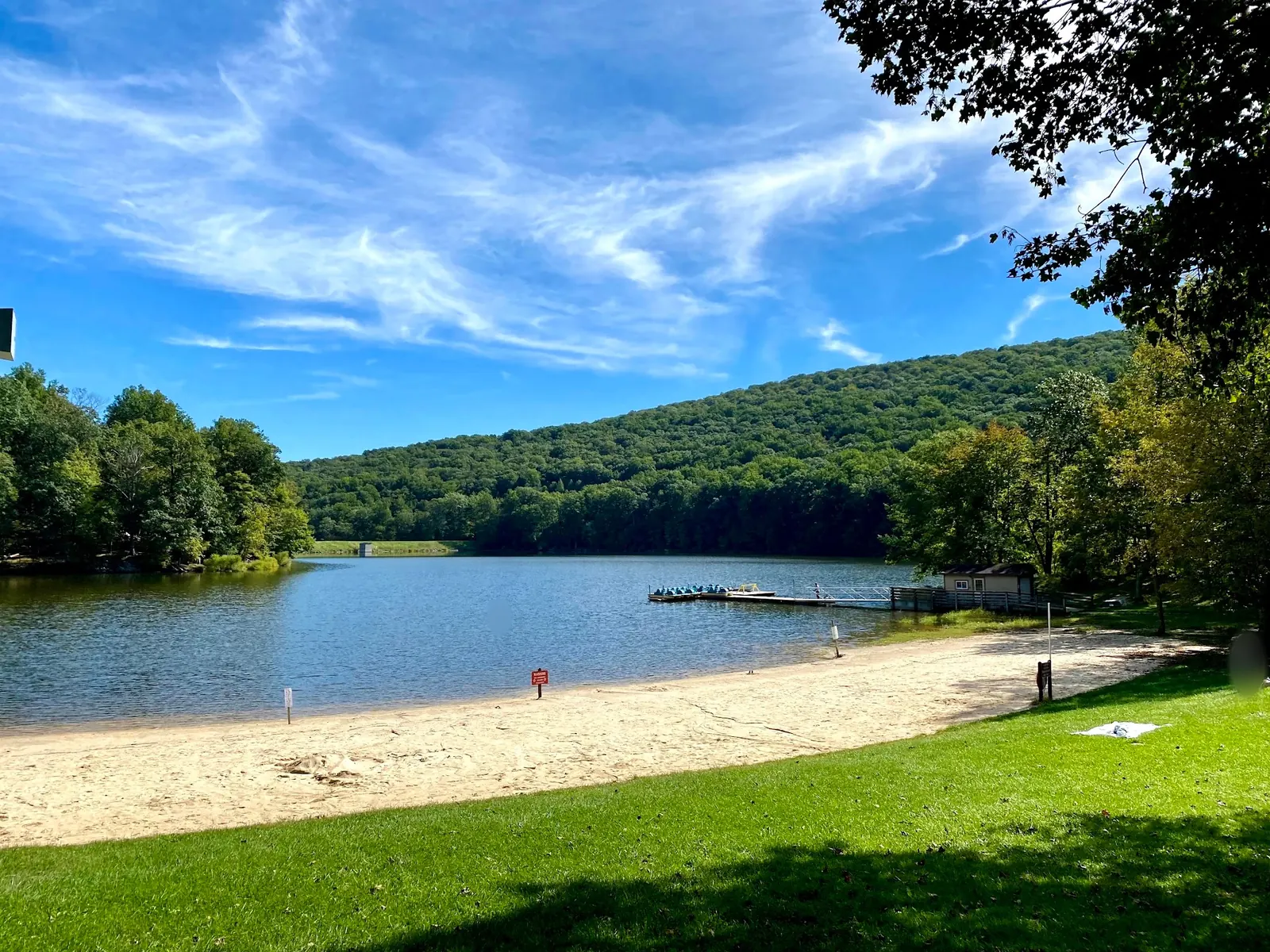
Swimming at the waterfall is prohibited. The separate Hunting Creek Lake swimming areas operate from Memorial Day weekend through Labor Day weekend. Swimming is prohibited after Labor Day.
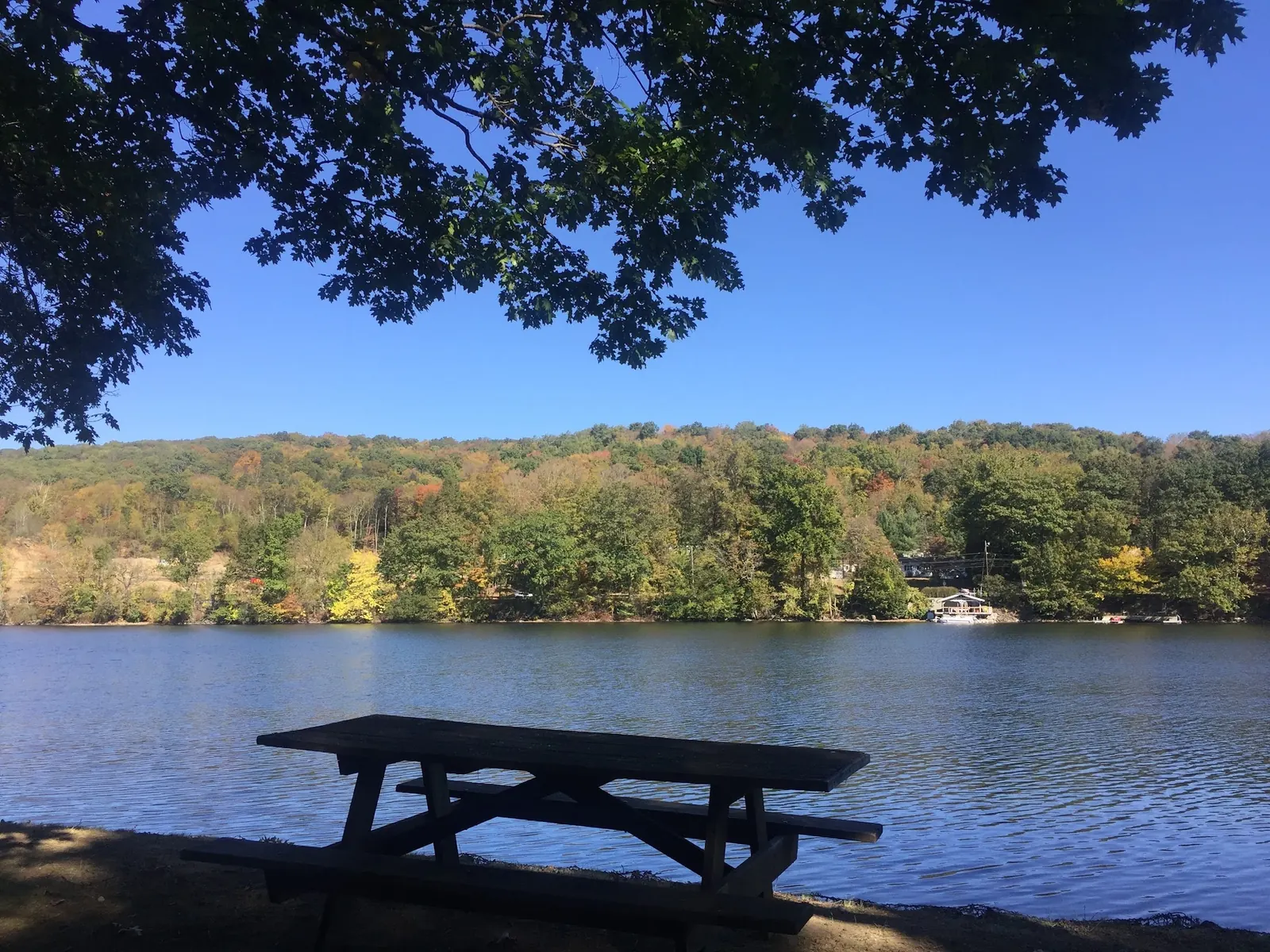
The waterfall and its rocky pool are not the swimming beach. Use the designated Lake Housatonic beach only when open, check the current water-quality report and follow posted restrictions.
Photos show historical scenery, not today's flow, staffing or permission to enter. An image of a waterfall is not an invitation to swim beneath it.
Build the trip around a named swimming area
Find the land manager's page for the exact access area. Distinguish the waterfall trail, swimming beach, boat launch and campground.
Read swimming restrictions, season dates and current notices. General park opening hours do not guarantee swimming access.
Check admission, reservations, parking capacity and the route from your actual starting point.
Check weather and any water-contact advisory. Keep a non-swimming backup rather than seeking an unsigned entry when an area closes.
Keep waterfall viewing separate
Use marked trails and overlooks. Do not climb around barriers, slide down cascades or scout a landing zone as a substitute for an official rule. Hiking difficulty and swimming ability are different questions. Ask the park about accessible routes and facilities for your group rather than relying on an “easy” label.
Our earlier automatic categories used description length, confidence labels and words such as “deep” or “plunge.” Those were not evidence of swimming permission and have been removed.
Joshua Havens created Hidden Swimming Holes to make it easier for people to find — and safely visit — natural freshwater swimming destinations across the United States. He researches access conditions, water quality resources, and land management rules so you don't have to start from scratch. He holds a strong belief that good outdoor recreation information should be accurate, honest about its limitations, and freely available.
Share your next swimming adventure
Send this guide to someone you would like to explore with.