visitor center ranger station near BURNS JUNCTION (OR) OR
Visitor services

Background: generated illustration, not a photograph of this location.
Plan a remote visit to Whitehorse, also called Willow Creek Hot Springs, with reviewed photos, camping context, road checks and official BLM contacts.
Swimming restriction
Follow current land-manager and posted site restrictions. Historical soaking accounts do not establish today's pool temperature, water quality or unrestricted access. Do not jump, dive or alter the pool walls or flow.
Official sources checked:
Location
A closer look
Photos show past visits, not current water levels or swimming conditions. Select a photo to view it larger.
This is a desk-researched listing. A record update or map check does not confirm current swimming permission or water conditions.
Found an error? Send a correction with the location and a source. How we research listings.
Travel Oregon identifies Willow Creek Hot Springs as Whitehorse Hot Springs, near Willow Creek Campground in southeastern Oregon. Searching both names helps distinguish this rustic geothermal destination from unrelated Willow Creek locations. This is a soaking trip, not a cold-water swimming or jumping outing.
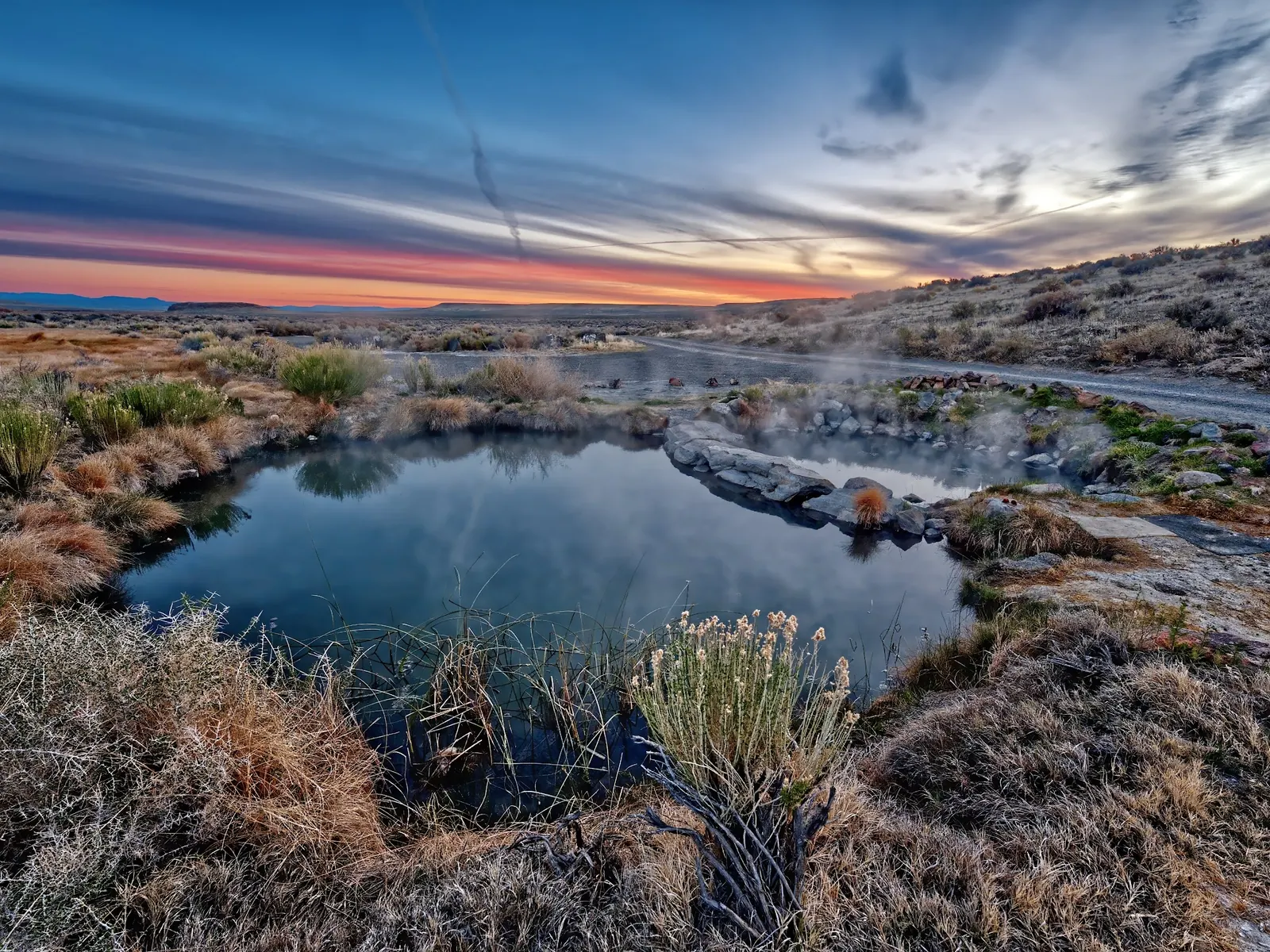
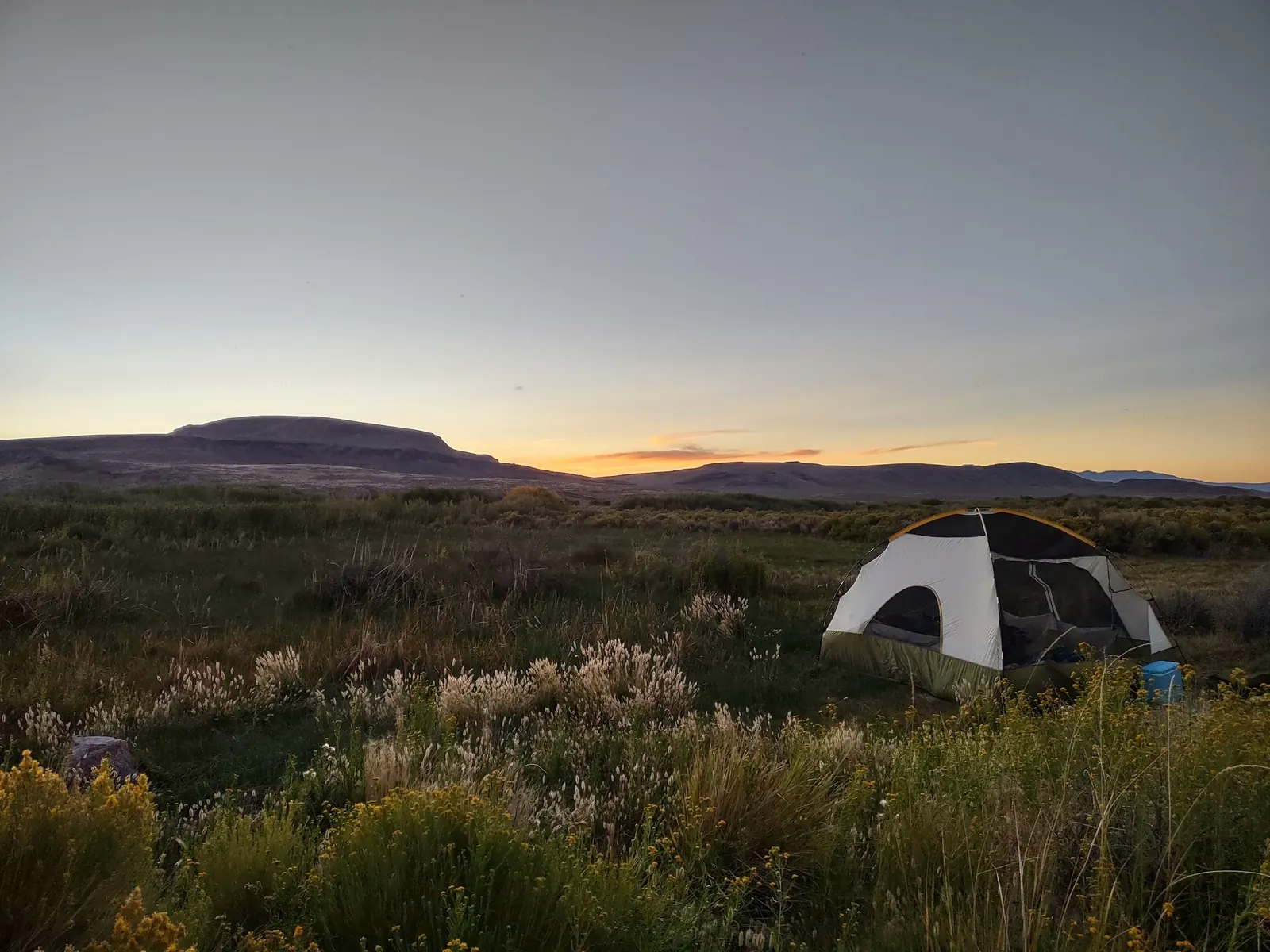
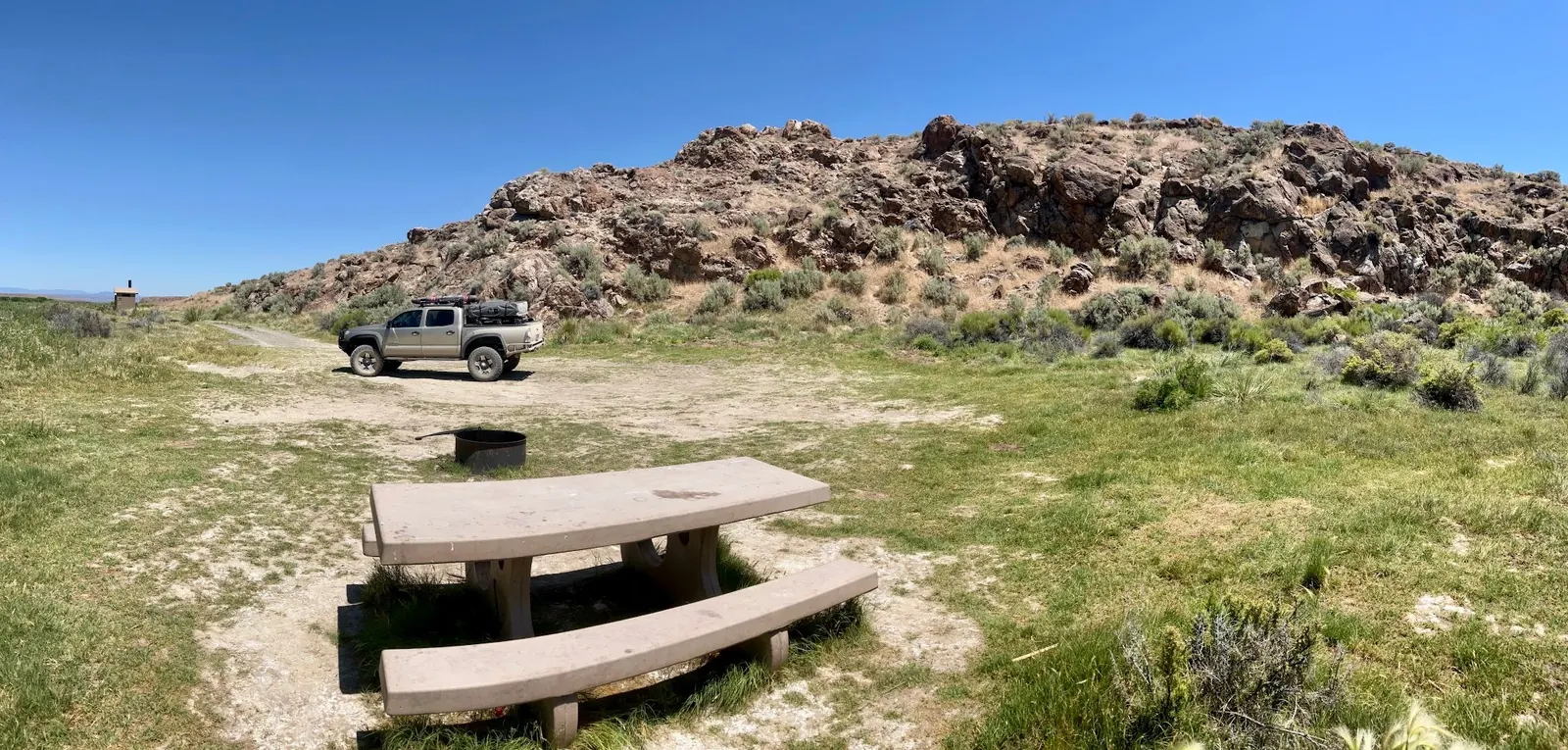
The divided pool, desert vegetation and open skyline give a useful sense of the setting. Other selected images show a tent and a picnic-table area beside a rocky bluff. These historical photos do not certify current pool temperature, campground availability, toilet service or the legality of any photographed camping spot. Close bather photos and the active campfire image were not selected.
A 2016 first-person Travel Oregon account describes a long gravel drive and recommends finding the spring in daylight. That account is not a present road report. Our old telephone-pole ribbons, turn distances and butte-road directions are retired because they have not been independently confirmed. Carry offline navigation and confirm the authorized approach before departure. Do not drive through private ranch property or around barriers.
Travel Oregon identifies the nearby campground, and its historical account mentions free camping. Confirm today's camping terms, permitted locations and fire restrictions rather than treating this as an unrestricted free campsite. Historical table and toilet photos are not a guarantee of working facilities. Bring drinking water; a saved Google running-water label does not establish a potable supply.
The Malheur Field Office at the Vale District Office lists 541-473-3144 as its contact number. Ask about this destination's roads, current restrictions and camping before travel. Consult the current BLM fire index, which includes district restrictions and closure rescissions. Do not transfer a regional notice to this spring without checking its boundary and current status.
No current pool temperature or water-quality clearance was established in this review. Avoid water that is too hot, keep your head above water and do not jump, dive or alter the pool's rocks and flow. Leave soaps and detergents out of the spring, pack out waste and ask permission before photographing bathers. The former therapeutic-water and blanket winter-access claims have been removed.
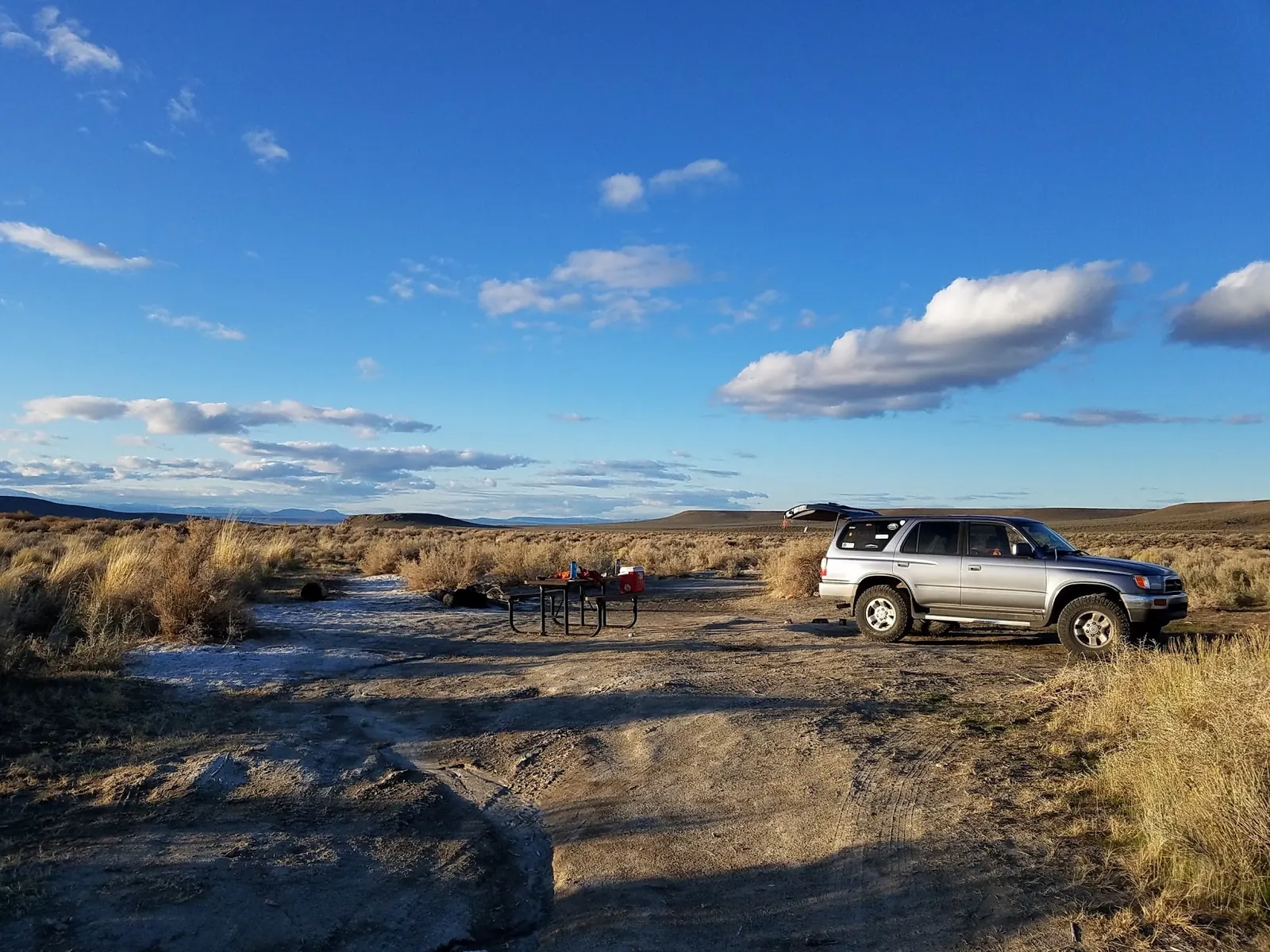
The additional historical view shows a picnic table, visitor gear and a parked SUV on open desert ground. It illustrates the exposed setting, not a reserved campsite, vehicle clearance or supplies provided to guests. Do not assume the photographed parking position is an authorized road or campground entrance. Check permitted camping locations, road conditions and current restrictions before travel.
Use both Willow Creek Hot Springs and Whitehorse Hot Springs when researching this southeastern Oregon destination near Fields. The historical approach references Whitehorse Ranch Road, but the old telephone-pole ribbons, exact turn distances and butte-road instructions have not been verified as a current usable route and are retired. Obtain current road and access advice from BLM, carry offline navigation, and plan to arrive in daylight. Do not cross ranch property or leave authorized roads to reach the spring. Retained coordinates are a historical reference, not a verified junction, parking area or pool entry.
Travel Oregon confirms the alias and remote destination. Its 2016 account describes a long gravel approach, not current passability. BLM's current fire index includes closure rescissions and district restrictions; a July 2026 regional notice alone does not establish a present spring closure or reopening. Check notices and ask the office about the exact approach.
Confirm the entrance, parking arrangements, and legal access with the land manager. A map pin does not establish a public right of access. Follow posted routes and never block gates or driveways.
Follow current land-manager and posted site restrictions. Historical soaking accounts do not establish today's pool temperature, water quality or unrestricted access. Do not jump, dive or alter the pool walls or flow. Public park access does not necessarily include permission to swim. Respect private property and posted restrictions.
Water conditions can change quickly. This listing does not provide a current safety or water-quality assessment. Check official alerts and avoid entering water when conditions or permission are uncertain.
Bring sturdy water shoes to protect your feet on rocks and slippery surfaces. A waterproof dry bag keeps your phone, keys, and valuables safe. Pack a quick-dry towel, sun protection, and drinking water - never drink from the natural water source.
Nearby places from saved public map data, not necessarily facilities at the swimming spot. Confirm access, hours, fees, and amenities with the operator before you drive.
Map data retrieved 2026-06-15
Visitor services
Checking nearby USGS water conditions…
Yes. Travel Oregon identifies Willow Creek Hot Springs as also known as Whitehorse Hot Springs, near Willow Creek Campground in southeastern Oregon.
No. Those landmarks and exact turns have not been verified as a current route. Obtain current road advice, carry offline navigation and arrive in daylight.
A 2016 Travel Oregon account mentions free nearby camping, but current fees, permitted sites and fire rules need confirmation with BLM. Do not camp at the pool edge or assume every photographed site is authorized.
A toilet structure appears in a historical photo, but current service and a potable supply were not confirmed. Bring your own drinking water and prepare for limited facilities.
No current measured temperature was established. Do not assume both sides are comfortable or safe because older visitors soaked there.
The BLM Malheur Field Office at the Vale District Office lists 541-473-3144. Ask about the authorized route, current access, camping and fire restrictions.
Whitehorse Hot Springs and Willow Creek Hot Springs are names for the same destination in Travel Oregon's information. Whitehorse Ranch is not presented as a visitor facility or permission to enter ranch property.
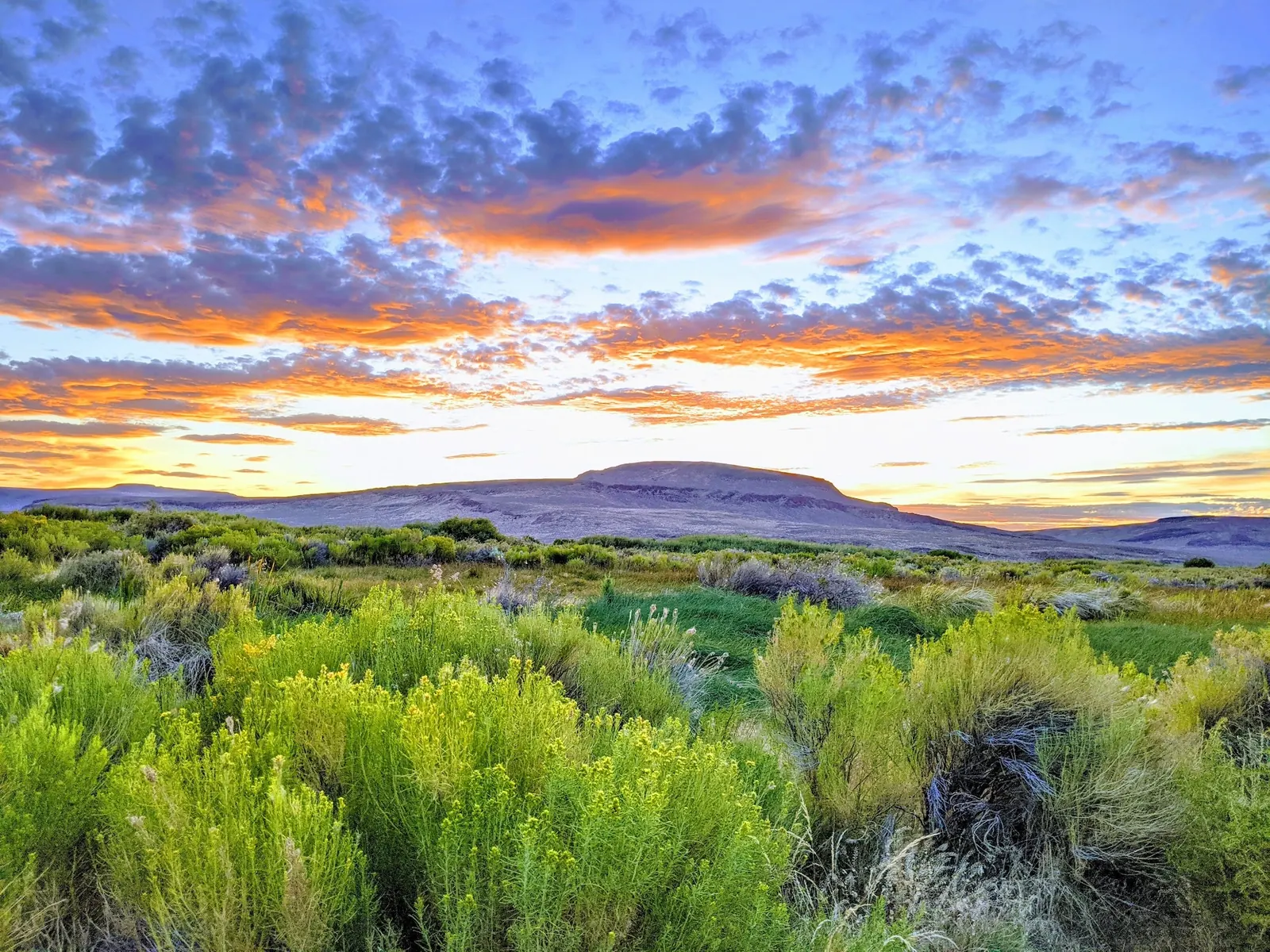
Reviewed historical gallery includes the divided pool, desert sunset, tent setting and picnic-table area. Images do not verify current water temperature, available campsites, fire permission or a legal arrival route. Ask consent before photographing people soaking.
Pack out waste, keep soaps and detergents out of the pools, avoid trampling wetland vegetation and do not alter rocks or water flow. Check current fire rules instead of relying on historical campfire photographs.
Browse every listed natural swimming spot in Oregon.
Find similar hot springs destinations across the directory.
See under-the-radar places and local favorites in the same state.
Compare easier-access destinations and safer planning options.
Use this safety guide before entering any natural water.
Safety & Access Notice
This information is for general planning only and may be incomplete, outdated, or inaccurate. Access rules, closures, water levels, currents, hazards, and legal restrictions can change at any time. Always verify current rules with the land manager or official source before visiting.
You are responsible for your own safety and for following all posted signs, laws, and local regulations. Read the full disclaimer.
Travel Oregon identifies Willow Creek Campground near the spring. A historical first-person account mentions free nearby camping; confirm current permitted sites, fees, setbacks and fire rules with BLM. Do not camp on the pool edge or use photos of tents as authorization for any particular spot.
Loading weather data…
Safety & Access Notice
This information is for general planning only and may be incomplete, outdated, or inaccurate. Access rules, closures, water levels, currents, hazards, and legal restrictions can change at any time. Always verify current rules with the land manager or official source before visiting.
You are responsible for your own safety and for following all posted signs, laws, and local regulations. Read the full disclaimer.
Joshua Havens created Hidden Swimming Holes to make it easier for people to find — and safely visit — natural freshwater swimming destinations across the United States. He researches access conditions, water quality resources, and land management rules so you don't have to start from scratch. He holds a strong belief that good outdoor recreation information should be accurate, honest about its limitations, and freely available.
Discover other amazing natural swimming destinations across America