Historic Watson Mill Bridge State Park
Tourist attraction
0.1 mi
4.8 (1654)
650 Watson Mill, Comer, GA 30629
Riverside campground featuring a 229-ft. wooden covered bridge, the longest in Georgia.
Barbecue grillPicnic tablesPublic restroomSlides

Background: generated illustration, not a photograph of this location.
Plan Watson Mill Bridge State Park with river-shoal context, current ParkPass fees, covered-bridge vehicle limits, camping options and rental availability.
Location
A closer look
Photos show past visits, not current water levels or swimming conditions. Select a photo to view it larger.
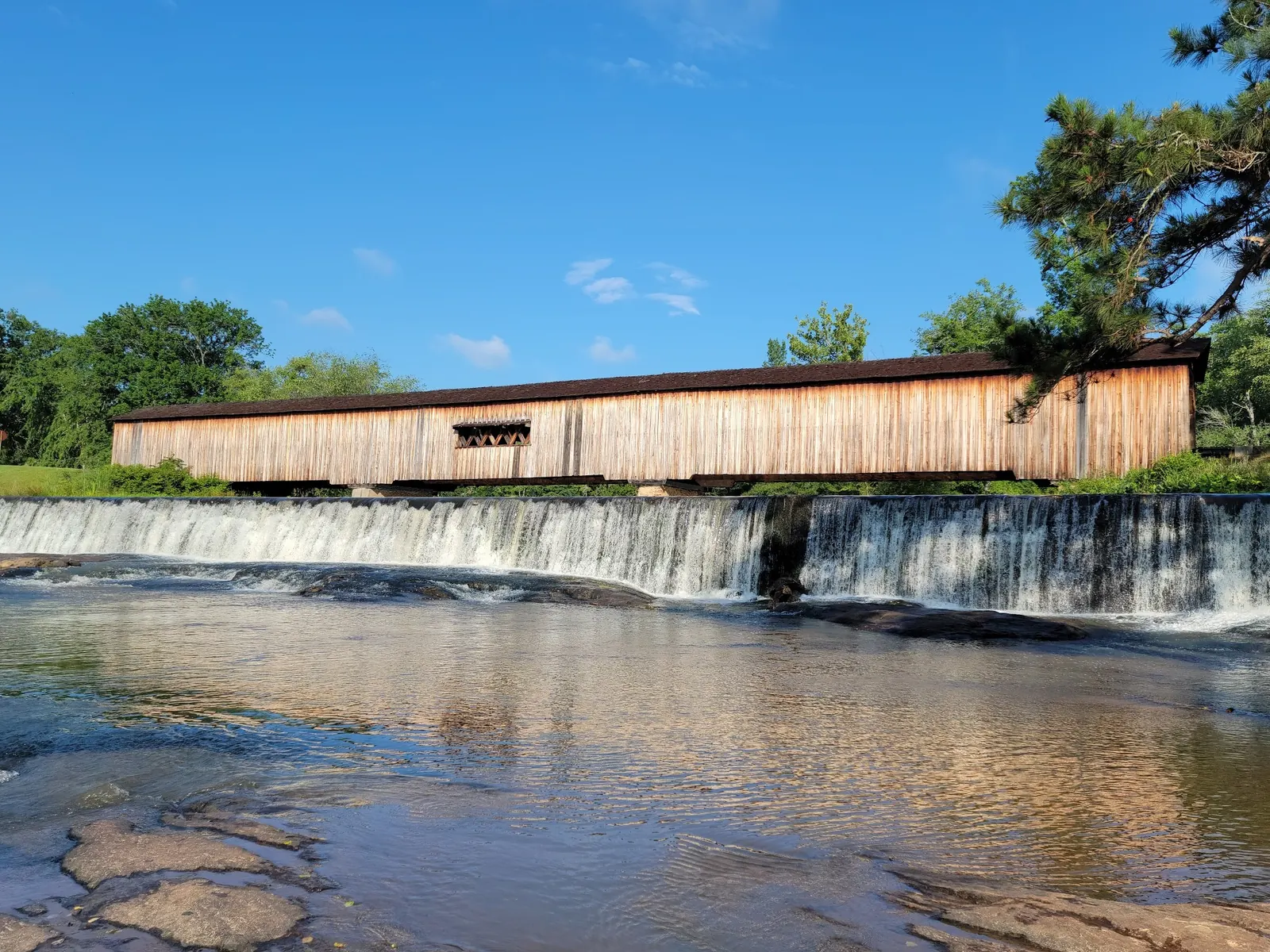
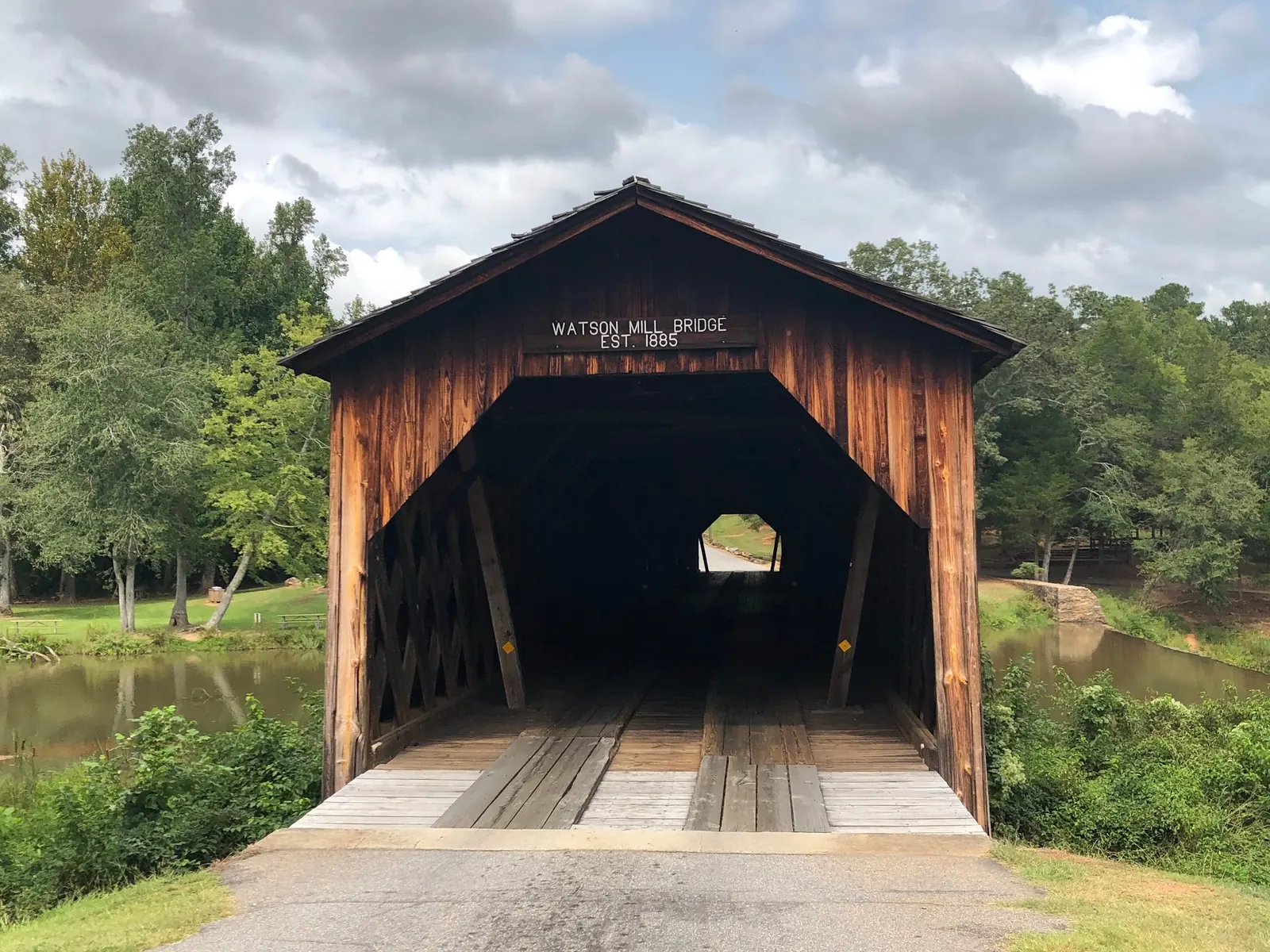
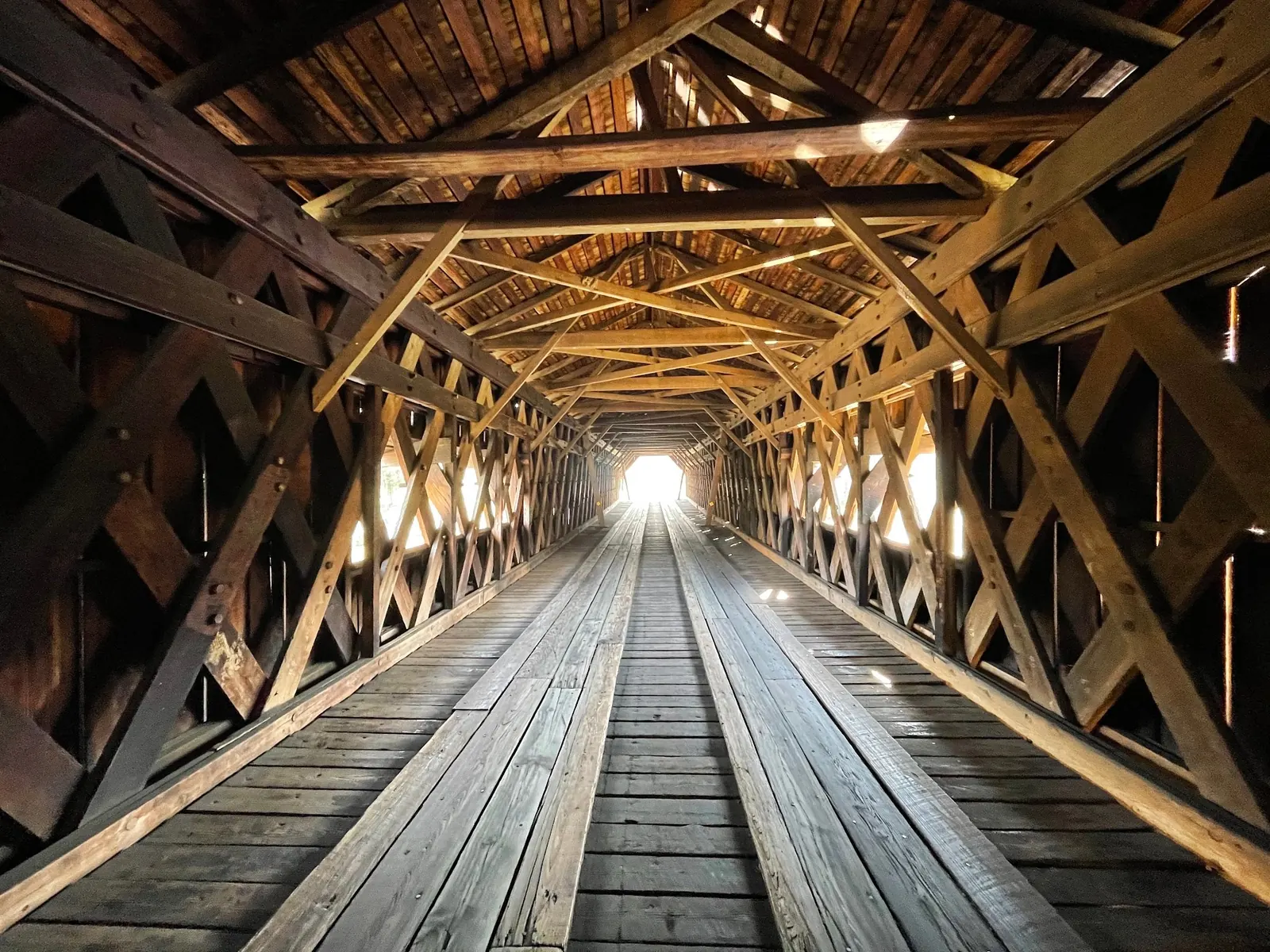
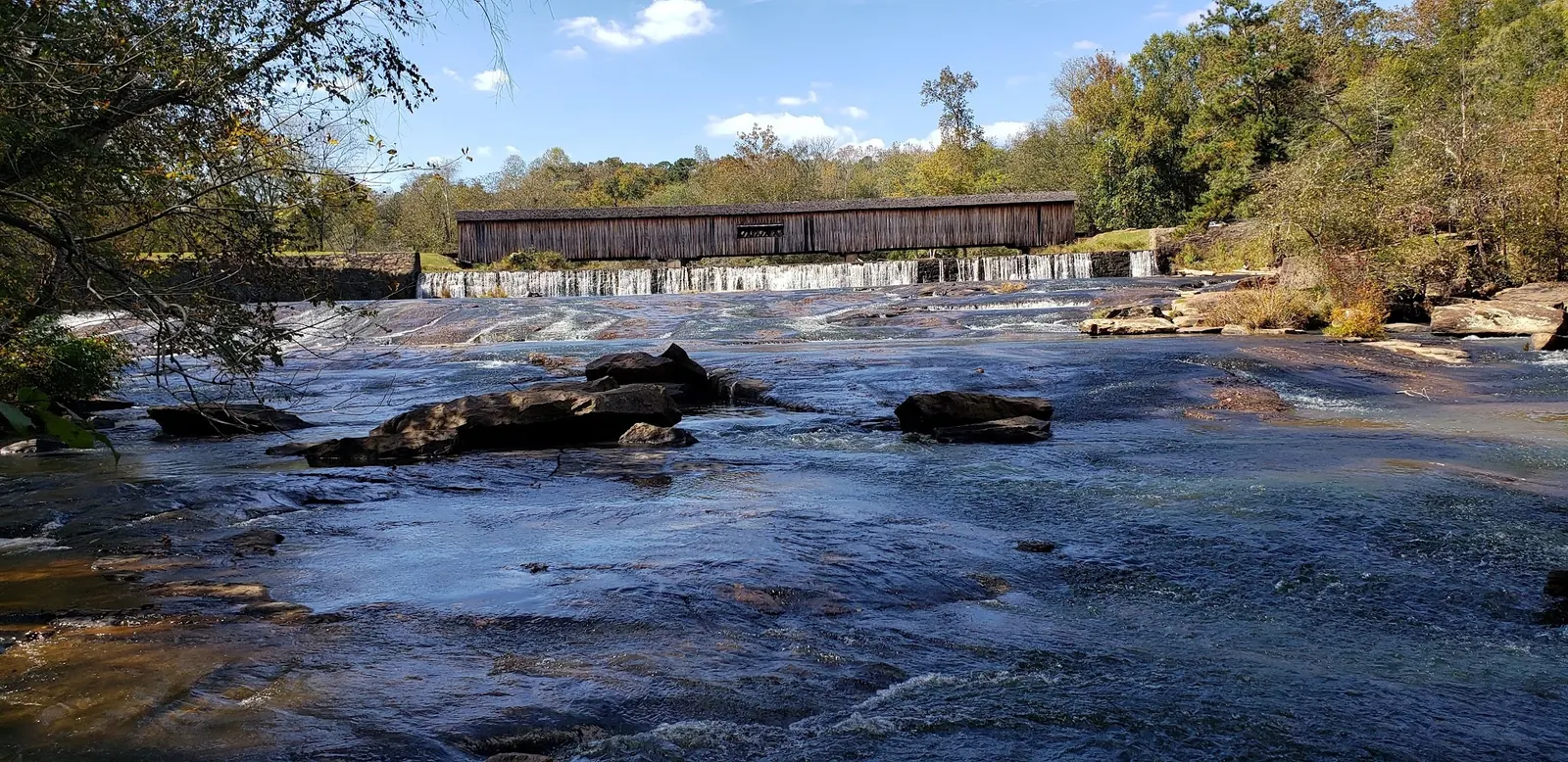
This is a desk-researched listing. A record update or map check does not confirm current swimming permission or water conditions.
Found an error? Send a correction with the location and a source. How we research listings.
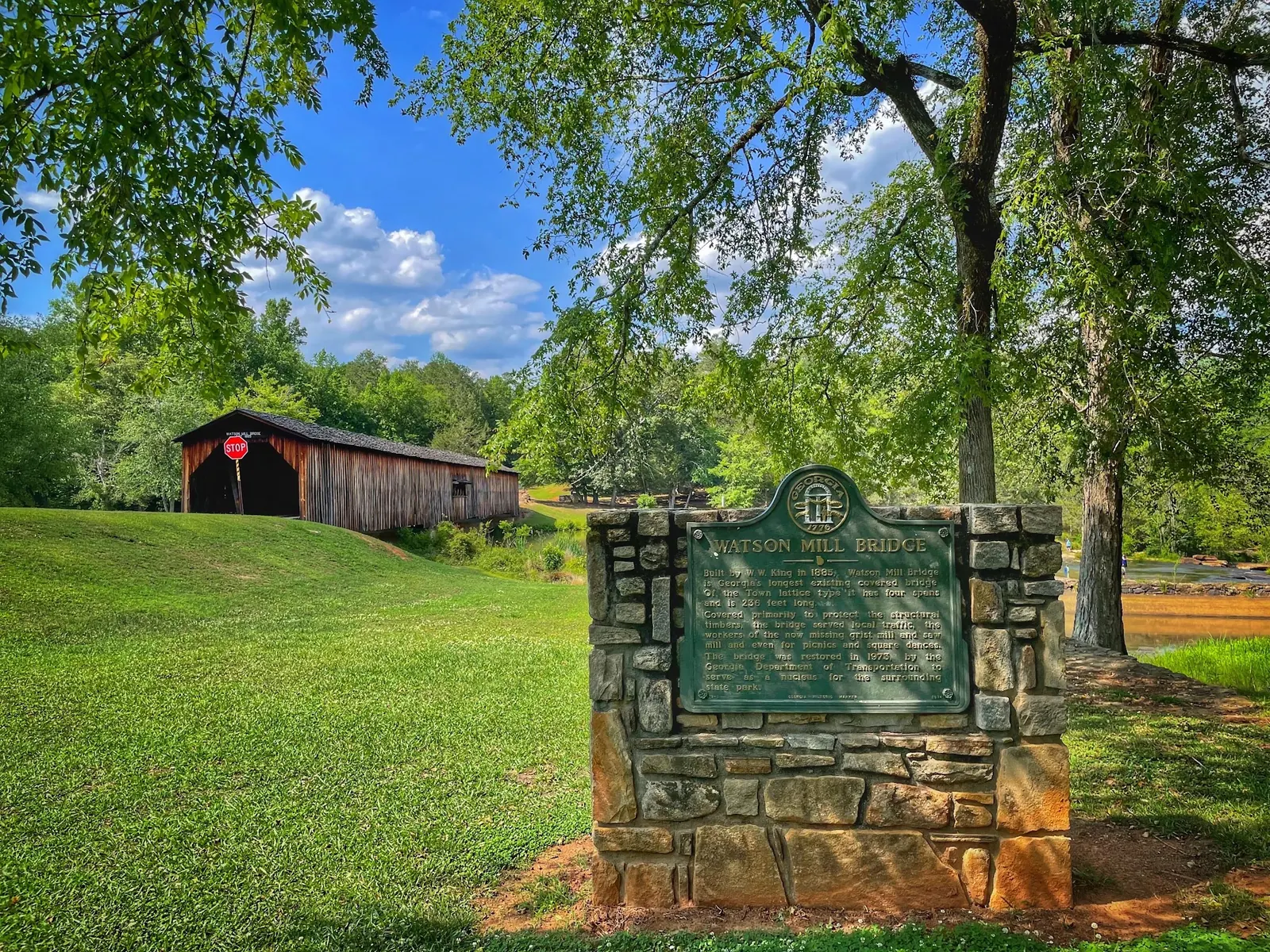
Watson Mill Bridge State Park pairs a wooded South Fork River setting with a 229-foot covered bridge built in 1885. The park manager describes summer water play in the shoals below the bridge, and Georgia State Parks' swimming guidance includes Watson Mill among its sliding-rock destinations. Think natural river recreation rather than a guaranteed swimming beach. The gallery shows the bridge and shoals in different historical conditions, not today's flow.
The current ParkPass page lists $10 per vehicle for a day or $70 for an annual pass. Larger passenger vehicles have separate rates. Overnight guests pay the daily parking fee once per vehicle during their stay, regardless of length, but parking is not included in the accommodation reservation. Check current fees before travel.
The park address is 650 Watson Mill Road, Comer. Its covered bridge has a 9-foot height clearance and a 3-ton weight limit. The manager directs regular RV campers to enter from Highway 22 and equestrian campers from Highway 72. Do not navigate a tall or heavy vehicle across the bridge simply because a route is shorter. The map uses the official park GPS reference, not a surveyed river entry.
The park lists regular tent, trailer and RV campsites, separate equestrian camping, pioneer campsites and log cabin bunkhouses. Choose the accommodation that fits your party and confirm availability through the park's reservation links. Picnic shelters and a group shelter are separate facilities; call for current capacity limits before booking.
Although rentals appear in the activity list, the current park notice says canoes and kayaks are unavailable for use. Call 706-783-5349 before relying on equipment availability. Trails, the playground, picnicking and bridge photography offer other ways to spend the day without assuming river conditions are suitable.
The river's rock surfaces, depth and current vary. Do not treat the shoals as universally gentle or suitable for every child or non-swimmer. Avoid the spillway and fast current, skip diving into unmeasured water, and supervise children closely. The reviewed pages do not establish lifeguard coverage. Pets are not permitted in state-park swimming areas or beaches.
Navigate to Watson Mill Bridge State Park, 650 Watson Mill Road, Comer, Georgia 30629. The map uses the manager's park GPS reference, not a surveyed river entry. The covered bridge has a 9-foot height clearance and a 3-ton weight limit. Regular RV campers should enter from Highway 22; equestrian campers should enter from Highway 72. Follow park signs and staff instructions for day-use parking and permitted river access.
The park currently lists hours of 7 a.m.-10 p.m. and office hours of 8 a.m.-5 p.m. daily. Confirm notices before travel. Covered-bridge restrictions apply to both vehicle height and weight; the map reference does not verify accessible river entry.
Confirm the entrance, parking arrangements, and legal access with the land manager. A map pin does not establish a public right of access. Follow posted routes and never block gates or driveways.
Current swimming permission has not been independently confirmed for this listing. Check official rules, fees, hours, and closures before visiting. Public park access does not necessarily include permission to swim. Respect private property and posted restrictions.
Water conditions can change quickly. This listing does not provide a current safety or water-quality assessment. Check official alerts and avoid entering water when conditions or permission are uncertain.
Bring sturdy water shoes to protect your feet on rocks and slippery surfaces. A waterproof dry bag keeps your phone, keys, and valuables safe. Pack a quick-dry towel, sun protection, and drinking water - never drink from the natural water source.
Nearby places from saved public map data, not necessarily facilities at the swimming spot. Confirm access, hours, fees, and amenities with the operator before you drive.
Map data retrieved 2026-06-15
Tourist attraction
650 Watson Mill, Comer, GA 30629
Riverside campground featuring a 229-ft. wooden covered bridge, the longest in Georgia.
Camping farm
990A Belmont Rd, Athens, GA 30605
Gas station
1321 Oconee St, Athens, GA 30605
Parking garage
705 E Broad St, Athens, GA 30601
Public bathroom
280 E Dougherty St, Athens, GA 30601
Parking garage
125 W Washington St Ste 121, Athens, GA 30601
Visitor center
405 College Station Rd, Athens, GA 30602
RV park
5540 High Shoals Rd, Bishop, GA 30621
Checking nearby USGS water conditions…
The park manager describes summer shoal play below the bridge, and the state swimming guide includes Watson Mill's sliding rocks. Check current conditions and posted instructions; this is not a guarantee of suitable swimming conditions.
The current Georgia ParkPass rate is $10 per vehicle/day or $70 annually. Larger passenger vehicles have separate rates. Confirm current requirements before travel.
No. Overnight guests pay the daily ParkPass fee once per vehicle during their stay, regardless of duration, unless using an applicable pass or exemption.
The bridge has a 9-foot height clearance and a 3-ton weight limit. The park directs regular RV campers to the Highway 22 entrance and equestrian campers to Highway 72.
The current park notice says canoes and kayaks are unavailable for use. Call the park before planning around rentals.
It uses the official park GPS reference. It is not a surveyed swimming entry or confirmation of accessible water access.
The Watson Mill Covered Bridge showcases 19th-century engineering and serves as a reminder of Georgia's once-abundant covered bridges.
Covered-bridge exterior, timber lattice interior and downstream river shoals. Gallery photographs provide historical place context, not current river conditions or surveyed water-entry locations.
Georgia State Parks does not permit pets in swimming areas or beaches. Follow posted site rules, stay on permitted routes and remove litter.
Browse every listed natural swimming spot in Georgia.
Compare nearby options around Atlanta before you choose a route.
Find similar river destinations across the directory.
See under-the-radar places and local favorites in the same state.
Compare easier-access destinations and safer planning options.
Use this safety guide before entering any natural water.
Safety & Access Notice
This information is for general planning only and may be incomplete, outdated, or inaccurate. Access rules, closures, water levels, currents, hazards, and legal restrictions can change at any time. Always verify current rules with the land manager or official source before visiting.
You are responsible for your own safety and for following all posted signs, laws, and local regulations. Read the full disclaimer.
The park lists 21 tent/trailer/RV campsites, 11 equestrian campsites, a buddy equestrian site, three pioneer campsites and three log cabin bunkhouses. Reserve the appropriate accommodation separately and confirm availability. Parking is not included in the reservation.
Loading weather data…
Safety & Access Notice
This information is for general planning only and may be incomplete, outdated, or inaccurate. Access rules, closures, water levels, currents, hazards, and legal restrictions can change at any time. Always verify current rules with the land manager or official source before visiting.
You are responsible for your own safety and for following all posted signs, laws, and local regulations. Read the full disclaimer.
Joshua Havens created Hidden Swimming Holes to make it easier for people to find — and safely visit — natural freshwater swimming destinations across the United States. He researches access conditions, water quality resources, and land management rules so you don't have to start from scratch. He holds a strong belief that good outdoor recreation information should be accurate, honest about its limitations, and freely available.
Discover other amazing natural swimming destinations across America