Red Rock Ranger District Visitor Center
Visitor center
19.3 mi
4.8 (1868)
Red Rock Information Center, 8375 AZ-179, Sedona, AZ 86351
Restroom

Background: generated illustration, not a photograph of this location.
Plan Sycamore Canyon via Parsons Trail near Clarkdale: creek crossings, wilderness rules, the full trail distance, ranger contact and reviewed canyon photos.
Location
A closer look
Photos show past visits, not current water levels or swimming conditions. Select a photo to view it larger.

This is a desk-researched listing. A record update or map check does not confirm current swimming permission or water conditions.
Found an error? Send a correction with the location and a source. How we research listings.
Near Clarkdale, Parsons Trail No. 144 follows a spring-fed creek through lower Sycamore Canyon Wilderness. The Forest Service trail page lists swimming among recreation opportunities. Treat this as a wilderness outing with changing water conditions, not a managed beach where every pool is suitable for every visitor.
The official trail distance is 3.3 miles one way, with approximately five hours for the full roundtrip. The initial descent is steep; the return includes climbing back out. Those figures describe the trail, not a guaranteed distance to the first pool. Leave enough daylight and energy for the return rather than using the old cairn-by-cairn directions.
The trail crosses the creek repeatedly. The Forest Service warns that crossings can range from wet feet to impassable and that flooding can be rapid and unexpected in rainy periods. Check the weather and turn back when a crossing exceeds your ability. A quiet-looking gallery image is not evidence of today's flow, depth or water quality. Avoid jumping and diving.
The official approach crosses the Verde River at the Tuzigoot turnoff, then turns left onto Forest Road 131 for about 11 miles to the trailhead. Ask the Red Rock Ranger Visitor Center at 928-203-2900 about road conditions, restrictions and access requirements. The legacy map pin is not a verified trailhead or water entry. Bring drinking water and supplies; no developed swimming facilities are established by the reviewed trail page.
Camping and campfires are prohibited within the first 3.7 miles of the valley. Where camping is allowed elsewhere, the trail page requires separation from springs and checking current fire restrictions. Book any developed campground as a separate part of the trip. Bicycles, strollers, carts and drones are among the mechanized equipment prohibited in the wilderness.
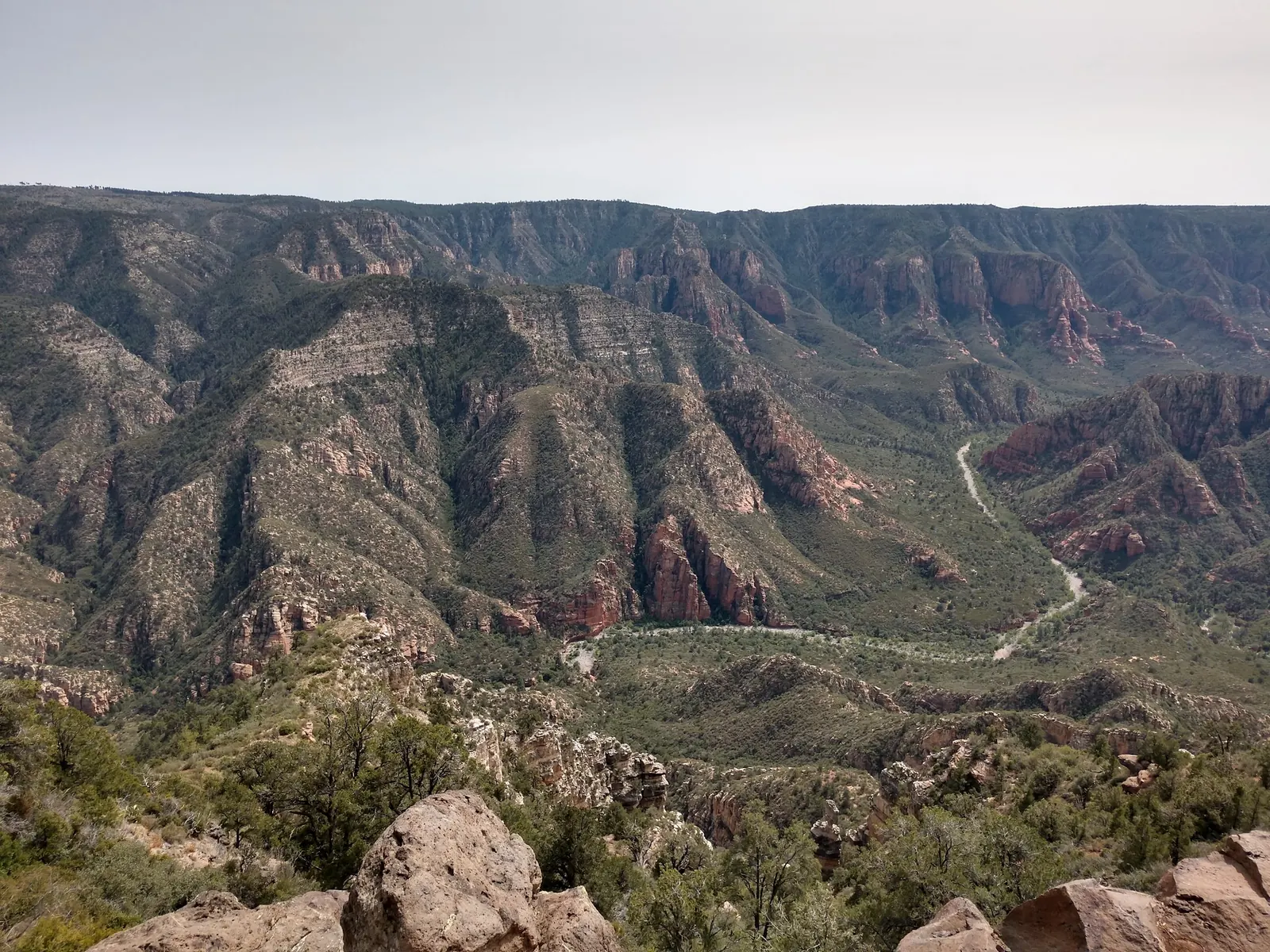
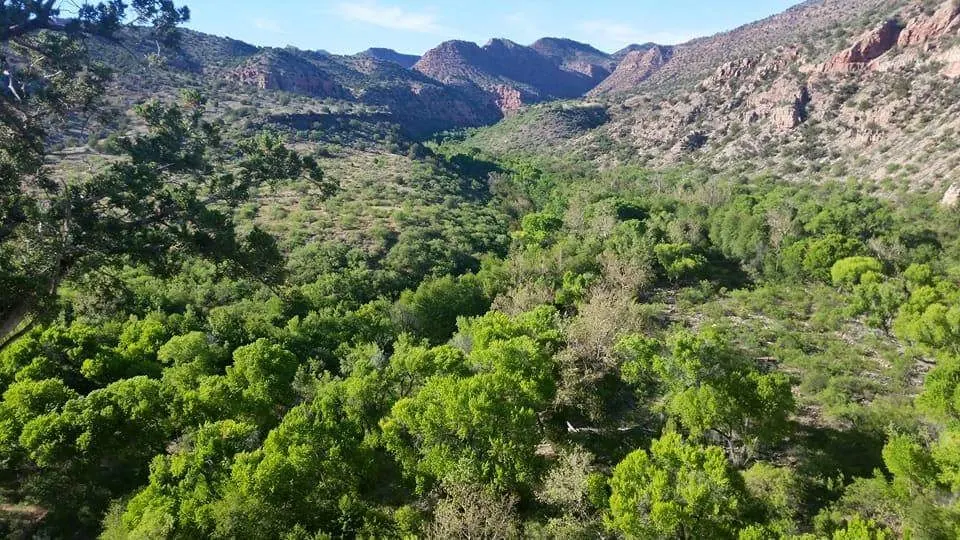
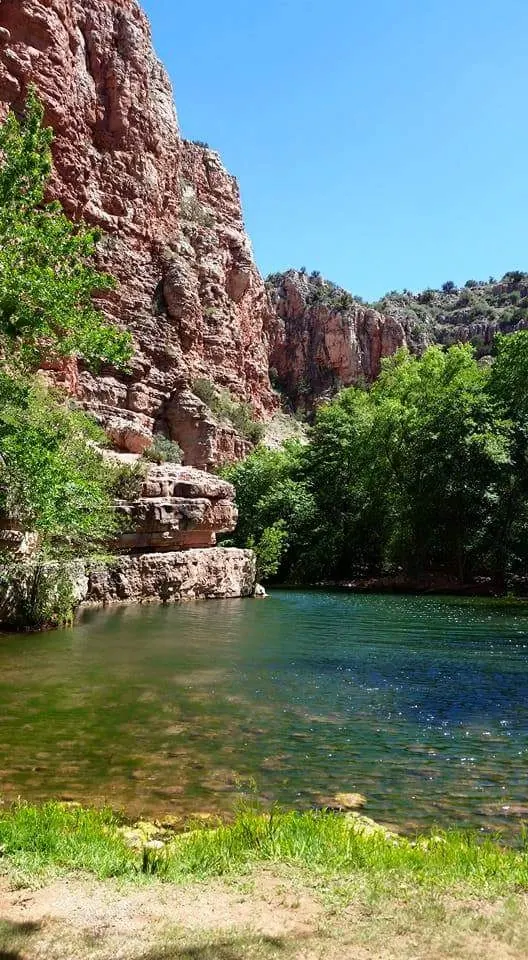
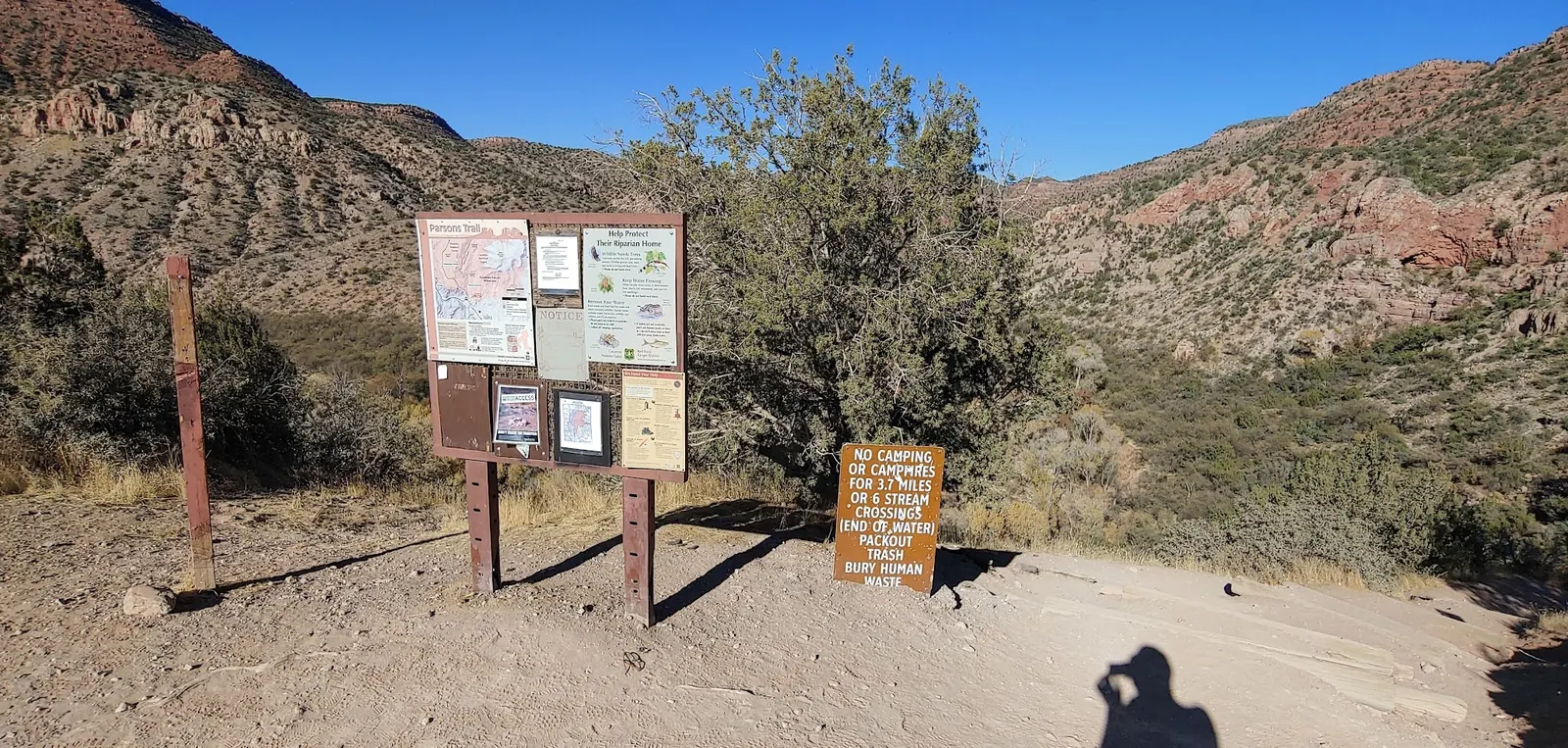
The selected gallery includes canyon scenery, a creek pool, a wilderness sign and the Parsons Trailhead information board. These are historical location-context photographs, not current notices or surveyed swimming-entry coordinates. Read the current official rules and posted signs when planning the visit.
Use the official Parsons Trail No. 144 directions near Clarkdale. From the Tuzigoot turnoff, cross the Verde River, turn left onto Forest Road 131 and continue about 11 miles to the trailhead. Check road conditions with the ranger office before driving. Follow the signed trail; the retained legacy pin is not a verified parking or swimming-entry point. Do not navigate by an old rock cairn or assume a particular crossing remains passable.
The Forest Service lists 3.3 miles one-way and approximately five hours roundtrip for the full trail. That is not a surveyed distance to every pool. Creek crossings can range from wet feet to impassable; turn back if conditions prevent a safe crossing.
Confirm the entrance, parking arrangements, and legal access with the land manager. A map pin does not establish a public right of access. Follow posted routes and never block gates or driveways.
Current swimming permission has not been independently confirmed for this listing. Check official rules, fees, hours, and closures before visiting. Public park access does not necessarily include permission to swim. Respect private property and posted restrictions.
Water conditions can change quickly. This listing does not provide a current safety or water-quality assessment. Check official alerts and avoid entering water when conditions or permission are uncertain.
Bring sturdy water shoes to protect your feet on rocks and slippery surfaces. A waterproof dry bag keeps your phone, keys, and valuables safe. Pack a quick-dry towel, sun protection, and drinking water - never drink from the natural water source.
Nearby places from saved public map data, not necessarily facilities at the swimming spot. Confirm access, hours, fees, and amenities with the operator before you drive.
Map data retrieved 2026-06-15
Visitor center
Red Rock Information Center, 8375 AZ-179, Sedona, AZ 86351
Visitor center
Red Rock Information Center, 8375 AZ-179, Sedona, AZ 86351
Campground
1472 W Horseshoe Bend Dr, Camp Verde, AZ 86322
Relaxed resort with cozy cottages & mountain views, plus an outdoor pool & a picnic area.
Campground
1105 N Dreamcatcher Dr, Camp Verde, AZ 86322
Parking lot
1851 Camp Verde-Bridgeport Hwy, Camp Verde, AZ 86322
Hiking area
Fs 136, Camp Verde, AZ 86322
Federal government office
300 East AZ-260, Camp Verde, AZ 86322
Hiking area
2317 S Salt Mine Rd, Camp Verde, AZ 86322
Checking nearby USGS water conditions…
Yes, swimming is listed among the recreation opportunities. That does not establish that any particular creek pool or crossing is suitable today.
The Forest Service lists 3.3 miles one way and approximately five hours roundtrip. Those figures describe the full trail rather than the distance to every creek pool.
Camping and campfires are prohibited within the first 3.7 miles of the valley. Check the official trail restrictions before making any overnight plans.
No. The Forest Service warns that crossings can become impassable and that flooding can develop rapidly during rainy periods. Turn back rather than enter an unsafe crossing.
No. The official trail page identifies these among the mechanized equipment prohibited in the wilderness.
Contact the Red Rock Ranger Visitor Center at 928-203-2900. The legacy listing pin is not a verified trailhead or swimming-entry location.
Sycamore Canyon has deep historical significance, with Native American tribes like the Sinagua leaving behind cliff dwellings and other archaeological remnants. The area reflects Arizona's rich cultural heritage.
Reviewed canyon, creek-pool, wilderness-sign and Parsons Trailhead context, including a broad red-cliff canyon panorama. The panorama is collection scenery, not an identified pool or trail segment. Historical photos are not a current-condition report, surveyed swimming entry or permission to jump.
No camping or campfires in the first 3.7 miles of the valley. Motorized and mechanized equipment, including bicycles, strollers, carts and drones, is prohibited in the wilderness. Pack out trash and follow current posted rules.
Browse every listed natural swimming spot in Arizona.
Compare nearby options around Phoenix before you choose a route.
Find similar creeks destinations across the directory.
See under-the-radar places and local favorites in the same state.
Compare easier-access destinations and safer planning options.
Use this safety guide before entering any natural water.
Safety & Access Notice
This information is for general planning only and may be incomplete, outdated, or inaccurate. Access rules, closures, water levels, currents, hazards, and legal restrictions can change at any time. Always verify current rules with the land manager or official source before visiting.
You are responsible for your own safety and for following all posted signs, laws, and local regulations. Read the full disclaimer.
Camping and campfires are prohibited within the first 3.7 miles of the valley. Where camping is allowed farther away, stay at least 200 feet from springs and check current fire restrictions. Arrange any developed campground separately.
Loading weather data…
Safety & Access Notice
This information is for general planning only and may be incomplete, outdated, or inaccurate. Access rules, closures, water levels, currents, hazards, and legal restrictions can change at any time. Always verify current rules with the land manager or official source before visiting.
You are responsible for your own safety and for following all posted signs, laws, and local regulations. Read the full disclaimer.
Joshua Havens created Hidden Swimming Holes to make it easier for people to find — and safely visit — natural freshwater swimming destinations across the United States. He researches access conditions, water quality resources, and land management rules so you don't have to start from scratch. He holds a strong belief that good outdoor recreation information should be accurate, honest about its limitations, and freely available.
Discover other amazing natural swimming destinations across America